Home Survey Cost for Replacing Lost Corner Evidence After Site Work
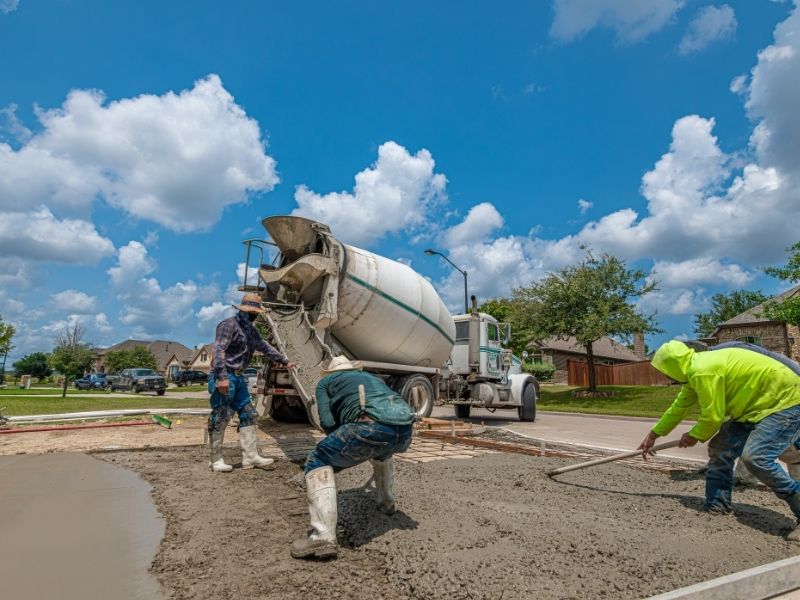
A crew finishes a driveway job. A fence contractor digs post holes. A landscaper clears out a back corner of the yard. Then the survey stake that used to mark the property corner is gone. For many homeowners, this is the moment a simple project turns into a question about home survey cost. The stake itself is not the real issue. What matters more is whether the evidence under that stake, like a buried pin or an old iron rod, got moved or pulled out too.
This matters because a missing corner does not just affect the project you just finished. It can affect where you build a new fence, where a crew pours a slab, or how confident a buyer feels at closing. Knowing what goes into fixing a lost corner helps you plan ahead, instead of guessing where the line used to run.
When Site Work Removes More Than a Visible Survey Stake
A survey stake is just a marker. The real evidence sits below it or right next to it. This might be an iron pin, a rebar rod, a concrete block, or in older cases a note about a tree or fence post from the original survey. When machines dig, grade, or pack down soil near a corner, that evidence can shift, get buried deeper, or come out of the ground with the stake.
This happens a lot with digging for driveways, pools, retaining walls, and utility lines. Heavy equipment driving back and forth near a corner can also pack down or shift the soil enough to move things. Pulling out a tree is another common cause, since roots often wrap around old pins and pull them up with the stump. Once that evidence is gone or its spot is unclear, a surveyor cannot point to it with confidence anymore. They have to work out the corner’s true location using other proof.
What Surveyors Review After Corner Evidence Is Disturbed
When a corner marker is missing, a surveyor does not start from zero. They start with what is still there. This usually means the property’s recorded deed, any older survey plats on file, and the physical markers still standing at other corners of your lot or the lots next door.
From there, they look at how those known points connect to the missing one. If two nearby corners are still solid, that gives a strong base for figuring out where the missing corner should sit, using the bearings and distances written in the deed. They may also check for other clues near the spot, like old fence lines, a long-standing driveway edge, or a change in plants or grass that hints at where the line used to run. The more solid points a surveyor can confirm, the less guessing goes into placing that corner back.
How Site Disturbance Can Affect Home Survey Cost
Home survey cost for this kind of work depends a lot on how much proof is left to work with. If only one corner was disturbed, and the corners around it plus the paperwork are solid, the job tends to be simpler. Fewer unknowns usually mean less time spent piecing things together and less time spent in the field.
Cost tends to go up when several nearby corners are also unclear, when the old deed has vague or mixed-up wording, or when no past survey of the property can be found at all. The site itself matters too. A corner buried under fresh fill dirt or hidden under new landscaping takes more time to find than one sitting in open, undisturbed ground. Since every yard and every situation is different, the best way to get an honest number is to tell the surveyor exactly what happened, including what work was done and roughly when. That lets them plan the visit instead of guessing at a price.
Old Survey Documents May Help Recover a Disturbed Corner
If you have a copy of an old survey, it is worth digging out before you make any calls. A past plat often shows the exact bearings and distances between corners, along with notes on how each one was originally marked. That gives a surveyor a head start, since it means less time spent hunting through courthouse records or piecing history together from scratch.
Old surveys are not always perfect, especially if the property changed hands or got divided since it was drawn. But even a rough starting point can cut down on research time and give the surveyor more to work with once they head out to find the corner. If you are not sure whether you have one, check with the title company from your closing, or the surveyor who worked on the land before.
Protect Remaining Corner Evidence Before Site Work Continues
If more work is coming, whether that is finishing a fence, adding on to a driveway, or bringing in more landscaping, it helps to find and flag any corners that are still there before the crew shows up. Pointing out those markers and asking the crew to work around them can stop a second corner from getting lost.
It also helps to keep a simple record of what you know. Take a photo of the stake before work starts. Write down roughly where it sits compared to something fixed, like the house or driveway. Keep a copy of any survey papers you have. All of this can make a future fix faster and cheaper if something gets disturbed again.
